Joke's Book Club (Nov. 3)
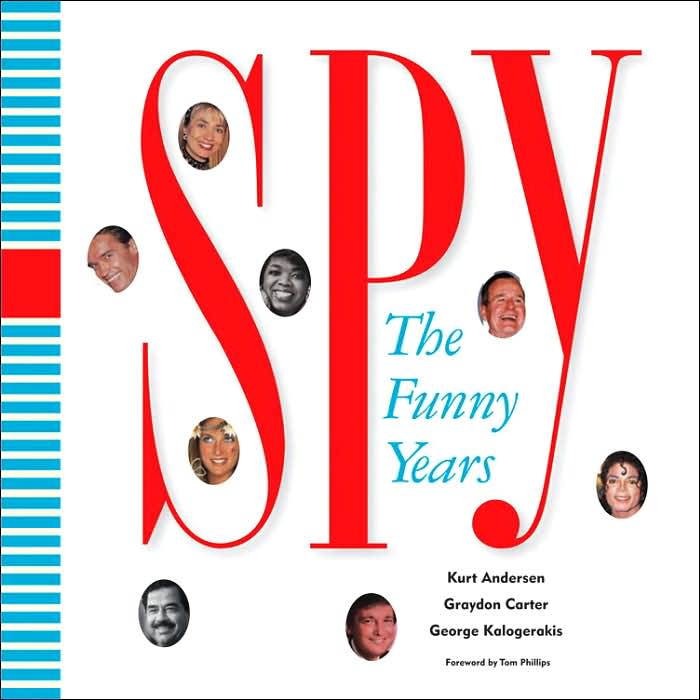 Those unfortunate enough to know me really well, will recall my outright adoration for the late, great Spy Magazine. Originally intended to be the American version of the British "Private Eye Magazine" (the name was taken from the magazine for which Jimmy Stewart worked in The Philadelphia Story) it soon found its voice in skewering all the sacred cows it could find in the public sphere. No one was safe.
It also owed much to the glory days of National Lampoon during the tenure of P.J. O'Rourke (think of the parody yearbooks and newspapers and government paperwork) especially in terms of "pitch and tone." By way of illustration, we have the famous and prescient Celebrity Chef Trading Cards.
But Spy broke new ground in its postmodern (in the best sense) design, managing to simultaneously look slick, jaded and fresh, and especially in its "investigative humor." (Digging through Sean Penn's trash and reporting the rather unusual contents was especially brilliant.) It was so self-consciously postmodern that it even published an ironic guide to postmodernism. As was expected, it had a very company town/New York feel...focusing on moguls, Wall Streeters, and local celebrities. Eventually this became somewhat ameliorated with correspondents in Hollywood* and Washington, DC, but never left it entirely.
Later in the trajectory of the magazine, they published several books. The more ::cough, cough:: accessible "Separated at Birth" series which I suspect paid the bills and more esoteric fare such as their faux-Cliffs Notes and guides for writing a modern novels. The latter pretty much put me off modern literature for good, and if you believe contemporary fiction is worthy of accolade, stay away from: ISBN 0-385-24745-1. It does to modern fiction what Supersize Me did for fast-food.
Of course, there were lawsuits aplenty, discord, buyouts and the inevitable death knell of a Tony Hendra** editorship...eventually the magazine ceased publication. (Boo! Hiss!)
Anyway.
This book is not so much a "Spy's Greatest Hits!" as it is a documentary in book form. It discusses the various factors that went into the magazine, the nearly obsessive attention to fact-checking (the editors were adamant about not being sued for libel. Ironically, they were sued for a lot of other stuff), the cool and detached style, and the malicious glee with which they referred to celebrities of the day--Donald Trump, for example, was always called "a short fingered vulgarian"--with monikers such as "churlish dwarf billionaire" or "bosomy dirty-book writer." More than anything else, it captures the zeitgeist of the mid-1980s to mid-1990s among those who fancied themselves the pinnacle of America.
-J.
* Movieline Magazine, arguably the Hollywood doppelganger of Spy, arguably covered this better. It also featured the estimable Joe Queenan, trumping any one writer at Spy, including Roy Blount Jr.
** I'm of the opinion the magazine industry's ultimate death omen is to have Tony Hendra editing a magazine.


Comments